Recently,
one of our parish priests mentioned the Eucharistic miracle of Lanciano
in his sermon and also mentioned some scientific studies that had been
performed. Could you please provide a little more information concerning
this miracle
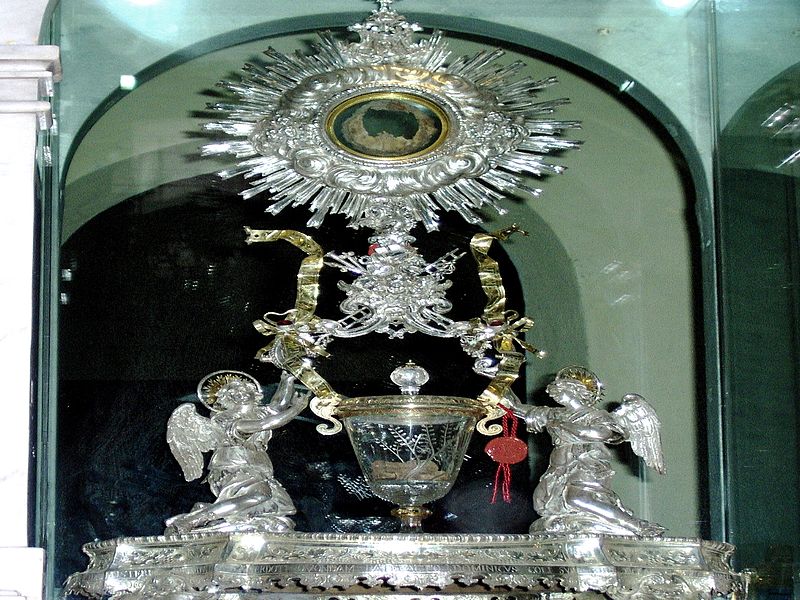 The
miracle of Lanciano is the first, and many believe the greatest,
Eucharistic Miracle of the Catholic Church. Keep in mind that strictly
speaking a miracle is an extraordinary event produced directly by God or
by His will and command through an agent, such as a saint. The miracle
occurs in a religious context and is a clear sign of supernatural,
divine intervention. Most importantly, the miracle arouses within the
spectator or recipient a greater conviction of faith in God.
With this in mind, we now turn to the miracle in question which occurred in the 700s in the town of Lanciano, then known as Anxanum, an ancient Roman city, located southeast of Rome. There the monks of St. Basil had established a monastery under the patronage of St. Longinus, traditionally believed to be the centurion at the crucifixion who proclaimed, Truly, this was the Son of God (Mt 27:54) and pierced the side of our Lord with his lance (Jn 19:34).
One day, a certain monk was offering the Holy Sacrifice of the Mass. Although we do not know his identity, an ancient document described him as ...versed in the sciences of the world but ignorant in that of God. Apparently, he had been plagued by doubts about transubstantiation: he agonized over whether the bread and wine changed substantially into the Body and Blood of our Lord at the words of consecration, and whether our Lord was truly present in the Holy Eucharist.

